
Can Police Use Your Smartwatch or Fitness Tracker Data Against You in a Delaware Criminal Case?
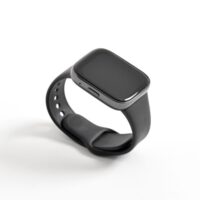
Technology is no longer a luxury but a necessity for millions of Americans. Smart watches, pedometers, and various health-monitoring applications can track your every move; they store your location, the amount of time spent in that location, and even monitor heartbeats and sleep cycles. Although this type of technology may seem innocent when used for fitness purposes, such information can be used against you in a criminal case.
Police departments in the State of Delaware and throughout the nation are now frequently relying on electronic evidence to aid their investigations.
What kind of data do wearable devices collect?
Today’s sophisticated devices can track an unbelievable amount of information about their users, which includes all of the following:
- Information about one’s location tracked via GPS;
- The number of steps made by the user throughout the day and his movement history;
- User’s heart rate and activity levels;
- Sleeping patterns;
- Received texts and calls;
- Data about app usage.
How prosecutors can use smartwatch data
With regard to criminal proceedings, the prosecution could try to employ wearable-device data to provide a timeline or contradict what a defendant says happened. Location history can be used by the prosecutor to prove that an individual was near the scene of a crim. Activity logs could be used by the prosecution to show that the accused was awake and active at a certain period.
Nationwide, investigators have employed fitness tracker information in their investigations for cases related to homicide, domestic violence, and fraud cases.
Nonetheless, wearable-device data can be unreliable as inaccurate GPS locations, sync issues, and incomplete activity history could lead to false assumptions.
Do police need a warrant for your data?
The Fourth Amendment provides protection against unreasonable search and seizure. But the use of digital devices raises various legal issues. Often, law enforcement agencies need a search warrant to retrieve digital evidence from a smartwatch or any other device kept in the cloud.
It is a settled matter that modern electronic devices carry lots of personal information that is worthy of constitutional protection. This will likely mean that investigators should prove that the search was conducted following proper legal procedures.
There are, however, exceptions. Where an individual freely gives consent to the search, it might render a warrant unnecessary. Investigators can try to get some records using a subpoena or other court orders through third parties.
Defending against digital evidence
Digital evidence cannot necessarily be introduced into a court of law. A criminal defense lawyer could argue:
- If the search was legal
- Whether the information was correct
- How the information was collected
- Any breaks in the chain of custody
- Whether the information supports the prosecutor’s claims
In some instances, the digital evidence may not even be admitted to trial at all.
Talk to a Wilmington, DE, Criminal Defense Lawyer Today
Michael W. Modica represents the interests of defendants who have been charged with a serious crime. Call our Wilmington criminal defense lawyers today to schedule an appointment, and we can begin discussing your next steps right away.