

Can Police Use License Plate Reader (LPR) Technology Against You in Delaware?
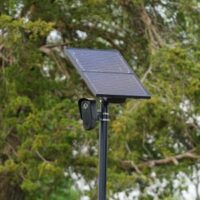
Technology has changed the way police conduct investigations, and one common device they use today is the automatic license plate reader (LPR). This device can scan a large number of license plates within seconds, which allows police to recognize stolen cars, find people who are being searched for, and trace the path of a car involved in alleged criminal activity. There are numerous concerns regarding this issue as it is related to privacy and constitutional rights. If you are charged with a crime in Delaware, you should understand how this technology works and how it is employed by law enforcement.
What is a license plate reader?
Automatic license plate readers are camera systems fitted on cars, traffic poles, bridges, or any stationary point. The system takes a picture of the license plate as the car passes by, and captures data like:
- License plate number
- Time and date of capture
- Location of the camera
- Sometimes pictures of the actual car
The data obtained is then cross-checked against databases that contain reports of criminal activity, such as stolen cars, wanted people, or expired plates.
How do police use LPR technology?
LPRs can help officers in several different investigations. These include:
- Finding missing cars
- Discovering cars that have been involved in robberies, assaults, or murders
- Finding persons who have warrants
- Finding hit-and-run cars
- Discovering whether the car was at the scene of the crime
The investigators can also look back through the history of LPR records to see where the car went throughout its life if the records have been kept by the agency using the system.
Can LPR data be used as evidence?
Yes. Prosecutors can use LPR to build their case in a criminal prosecution. But generally, LPR information is part of an overall investigation and is never used on its own to prove guilt.
A prosecutor could, for instance, use information from the LPR camera showing the car was present at the location of a burglary. But that, in itself, is insufficient to prove the guilt of anyone operating the car.
Are there limits on police use?
Even though license plates can be seen by all individuals using public roads, the use of LPR by law enforcement officials is still subject to constitutional restrictions.
Based on the facts of each case, legal questions that may come up include:
- Whether there was lawful acquisition of other evidence based on the LPR alert
- For how long LPR data was stored
- Whether officers used faulty or obsolete data from the database
- Whether investigators conducted improper expansion of the investigation without proper grounds
In case there was an unlawful stop, search, and seizure after the LPR alert, an attorney for the defendant will try to contest the admissibility of the evidence obtained.
Talk to a Wilmington, DE, Criminal Defense Lawyer Today
Michael W. Modica represents the interests of those charged with crimes in Delaware. Call our Wilmington, DE, criminal defense attorneys today to schedule an appointment, and we can begin preparing your defense right away.